Super Supporters」カテゴリーアーカイブ

still missing you

are we just wasting the time that we actually could have been very happy and enjoying each others’ company … but instead, we are doubting about each others’ feeling … afraid of losing face … afraid of getting hurt.

i still think we are 似合う。

because we are completely different. and we can communicate. not like how i am with other people.

i miss you …
why i did what i did

recently, it is true that i have made more new male friends, but the more i am with other people, the more i miss him … he is so cute …

外表上、one may wonder, if you care, why not message?

the thing is, because it hurts.

if i initiate, and if he not responds, then i will get hurt just like before, right? going crazy and wonder why he ignores me.

at least now, when he last time mailed me, i immediately responded, that is good of me, right?

hope i can prove to him that i actually WILL RESPOND, as long as he initiate …

the reason why i did not pick up the phone the first time, was because i was afraid i might hear things i not want to hear. i was not ready.

not that i am ready now, but at that time, i was definitely very shocked and もっと not ready!

BUT, just because i not pick up, just because i was still angry with him, does not mean that i not miss him …

maybe in his case, it is different, but in my case, it is not …

Working at Starbucks

私にはスターバックスで働く夢があります。大学生の時にスターバックスに興味を持ち始めました。飲み物がおいしいし、雰囲気が穏やかだし、おしゃれな店だと思いました。

大学を卒業してから10ヶ月後大学院に入学しました。専門は社会福祉でした。大学院を卒業してから2年後に、社会福祉者にとして働き始めました。そのときロスに住んでいて普通の生活をしていました。週に2,3回スターバックスに行ってくつろぎました。2007年に仕事を変えてストレスがどんどんたまってきました。安全じゃないところで働いていて働き続けることが個人的な事情で難しくなりました。仕事をやめることにしましたが、新しい仕事は前の仕事よりストレスが多かったです。2年でがまんできなくなりました。そして、去年の9月末に日本に来ました。

簡単に説明しましたが、もちろん、実際はもっと複雑です。

この話についてどうして書いていると思いますか。スターバックスの関係は何だと思いますか。

それはスターバックスでずっと働きたいと思っている理由は静かなところだからです。仕事内容も難しくないことと関連しています。単純な理由です。

ストレスがたまったら健康にわるいです。お金が少なくても健康に仕事ができるほうが、お金持ちになっても健康に悪い仕事よりがいいと思います。健康が大事です。スターバックスで働くのは楽しくて健康にいいと思います。仕事自体は難しくないでしょうが、面白そうです。

今日はお気に入りのスターバックスの店長に会いました!もうすぐスターバックスで働けるといいな!

Bunkyo City Culture Festival

My friend Reiko, who works for the Bunkyo City government here in Tokyo, invited me to a culture festival they were holding around mid-February. It was, overall, a blast: “free” is very much the right price for me and my fellow students; Bunkyo is a super swank city where Tokyo University (Todai) is located, lots of Todai graduates live, and where I can only guess their taxes help pay for the very impressive government building the festival was hosted in. The entire festival was very well thought out and accommodating to foreigners, sharing different parts of traditional Japanese culture via displays and knowledgeable on-hand experts.

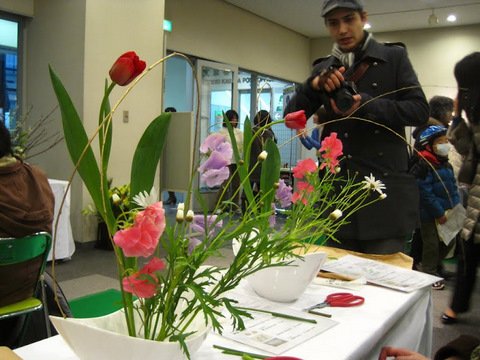
ikebana
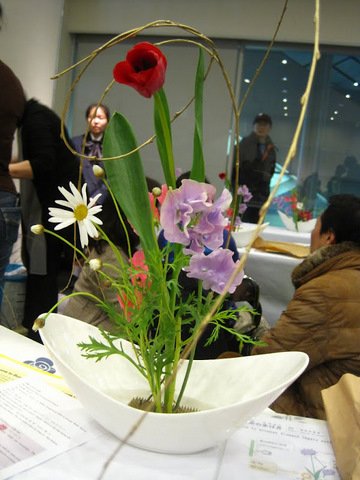
At Reiko’s recommendation, we arrived before noon to beat the crowds and went first to the Ikebana (flower arrangement) station. There an ikebana teacher showed us how to place the flowers following some basics of the craft’s aesthetics. This amounted to making a sort of triangle shape with the height/placement of the flowers. We were then given our flowers to wrap up and take home. Mine were tragically crushed by the end of the day, and I had to toss them – but don’t they look lovely?

ikebana2

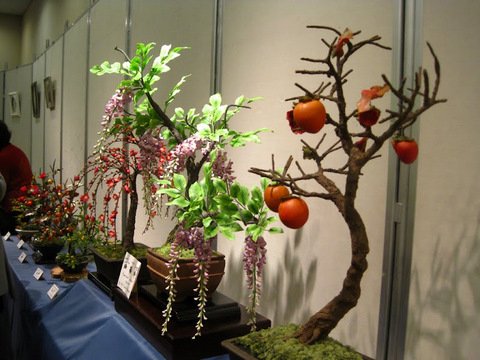
During our visit we also learned calligraphy, and after practicing under the teacher’s instruction a few times, we painted our characters of choice on paper fans. At yet another area we made our very own artificial bonsai trees – probably the best plant option for me, since everything else seems to die on my watch. My fake bonsai, however, is still green and flowering after many weeks!

bonsai
All in all it was a fantastic day courtesy of the Bunkyo City office. Thanks Reiko and thanks Bunkyo!

Japanese Study Resources

Here’s a list of the resources I use to study Japanese

  • Lang 8 – It’s an online journal/social networking site where people write journal entries in a language they are studying. Then their journal entries are corrected by native speakers or others who are also studying the same language. This site is excellent for improving grammar and vocabulary.
  • Japanese Pod 101 – This a series of 1-3 minute podcast conversations. After the conversation, the vocabulary is explained and then the main grammar points are discussed. This site is excellent for improving listening and speaking skills.
  • Tumblr – Tumblr is a blogging site that many people use to share their study habits, tips and tricks to learning Japanese. You don’t have to be a member to read someone’s blog, but you have to a member if you want to follow their blog.
  • Anki – Anki is a program that allows you to create flashcards. It uses the spaced repetition method (a learning technique that incorporates increasing intervals of time between subsequent review of previously learned material in order to exploit the psychological spacing effect. -according to Wikipedia).
  • Labochi – I meet with a private teacher once a week at my home and she is great! I found her on Labochi.
  • I just discovered Tae Kim’s Guide and Study Stream.
  • I have the textbook Japanese for Busy People.
  • I also use the iPhone application- Kotoba!

There are so many resources on the Internet that are free. With some time and practice, anyone can speak Japanese in no time!

Where are my sober, non-smoking vegetarians at?

I don’t drink. I don’t smoke. I don’t eat meat. I also don’t eat spicy food and eggs. I eat fish, but I don’t really like it.
I remember when I used to live in Kagawa, I would go out with my meat eating , super 元気, smoking friends (back then I was drinking).  Life was good. I was only 24 and didn’t mind that I would spend equally as much as everyone else even though I would eat about 25% of what they did.
ぎょうざダメ!
豚カツダメ!
しゃぶしゃぶダメ!
すき焼きダメ!
からあげもダメ!
コロッケさえダメ!
It wasn’t fair! But such is the Japanese style of eating out in groups. Damn you 割り勘!
I stopped eating meat when I was 16 for health reasons, and I have never been able to tolerate spicy food. I love Mexican and Mexican food is NOT spicy. It’s only spicy if you add (hot) salsa or jalapenos.  I have never smoked. Well, I tried once. It felt like my throat was on fire, so I never tried a second time. Where I’m from smoking is not allowed in restaurants, so I never had a problem with people smoking at restaurants.
However, eating out became more challenging when I stopped drinking. No, I’m not Muslim. No, I’m not pregnant either! I decided four years ago to improve my health, so I stopped drinking alcohol, which not only resulted in various health benefits but also social and spiritual ones (a post about my yoga journey will come later!).
As most of you know, smoking, drinking and eating meat seems to be a significant part of the Japanese dining experience. I can occasionally withstand a night out for a few hours at an izakaya , but I can’t do it every weekend, let alone once week. Twice a month is my limit, but I want to go out more and not get bombarded with questions about why I don’t drink, or why I don’t eat meat, or what I can eat, or if I can eat this while having cigarette smoke invade my body!
By the way, I respect you all and am not trying to convert anyone into being like me! This is just my way of life and I’m curious to know if any others like me are out there.
Any suggestions are welcome!

Life is a Battlefield

Last night I had a wonderfully, scary, exciting experience of catching the “last train” home. The main reason I don’t live in Tokyo is because off the jam packed trains. There are dozens of You Tube videos showing real, live, everyday people being squished into a train. It’s scary, but is it really?

Fortunately, I was with a friend and he had some insightful words to share during our adventure. First, as the train was approaching, and we saw an already packed train, he said, “This is a battlefield,” and we laughed and laughed and slowly smushed ourselves onto the train. Then, as we stood on the train, totally smushed and claustrophobic, I kept saying, “I’m scared, I’m scared.” My friend looked at me with a warming smile, “If you feel scared, you will be scared. If you feel excitement, you will feel excitement,” so we chose excitement and laughed, and twisted and turned with elbows in our faces, stepping on other’s toes during the hour ride home.

Life may be a battlefield, but we don’t have to be scared. We choose to be scared, or we choose to be excited and take everything in as an experience.

Namaste

Yay Japanese Police

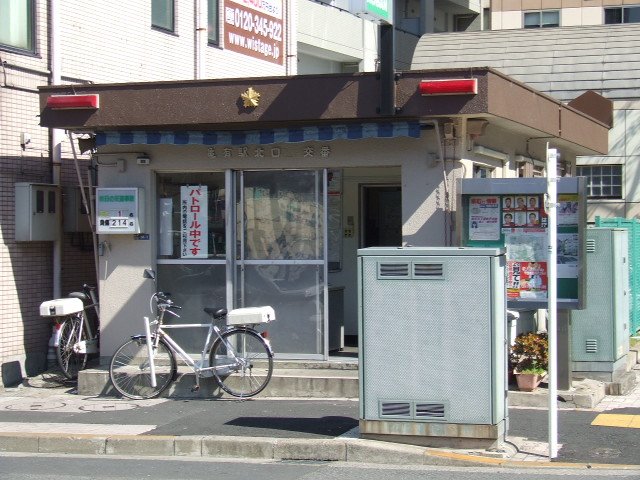
Anyone who ever has or ever will get lost in Tokyo should be glad for the Japanese police, and the “koban,” little labeled Japanese police boxes scattered throughout the city. I’ve made use of them more times than I can count for definitely non-urgent matters. For example, there was the day I was trying to find my graduate school’s campus for the first time: Hitotsubashi has an undergraduate campus in Kunitachi, about an hour west of Tokyo, but it also has a graduate school (my school) near the Imperial Palace. When I arrived in Tokyo last summer, I was wandering the streets, without a trusty internet connection or Google Maps, totally incapable of reading Japanese addresses, baffled by the lack of street signs, trying to find it. That’s when I came across two Japanese policemen.

Kameariekimae-Kitaguchi_Koban
Dusting off my out-of-practice Japanese, I asked them for directions. First they laughed: Hitotsubashi University? You’re in the wroooong place. To which I said, no, the graduate school has an office here, at this address, and I showed them the little slip of paper I’d brought along (anticipating just such a situation). They said yes, there’s a building there, but it’s not Hitotsubashi, and I said no, I promise you it is, it’s on floors five to nine. (At about this time someone else, a Japanese person, rode up on a bike to ask for directions – so at the very least I was encouraged I was not distracting them from important crime-fighting duties, or at least no more than the rest of the populace). The policeman who stayed with me said oh, is this their phone number here? I’ll call them, and proceeded to, yep, take out his cellphone and call the number. The administration office informed him they were indeed at that address, the mystery was solved, and he took out a laminated map and gave me very helpful instructions. It turns out if I had just kept walking two blocks the way I’d been going (instead of getting concerned and asking for directions) I would’ve found it.

Oh well. Japanese language practice.

Rikugien, a Green Escape in Tokyo

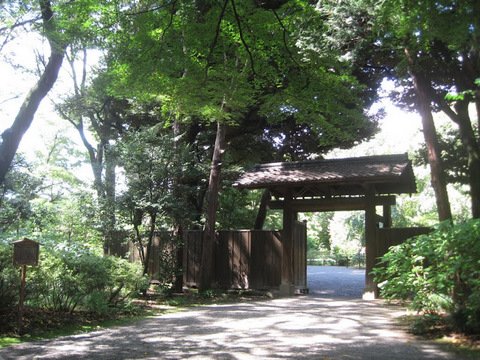
Rikugien is a traditional garden near Sugamo Station. According to the brochure:

“This strolling, mountain and pond-style garden was created based on the theme of Waka poetry in the 15th year of the Genroku Period (1702) by the shogun, Tokugawa Tsunayoshi’s trusted confidante Yanagisawa Yoshiyasu. This garden is a typical example of the famous gardens of Edo Period. In the Meiji Period, this garden became a second residence of the founder of Mitsubishi, Iwasaki Yataro. Later, in the 13th year of Showa (1938), the Iwasaki family donated this garden to the City of Tokyo, and in Showa 28 (1953) it was designated as a special site of exceptional beauty and an important cultural asset.”

IMG_4319

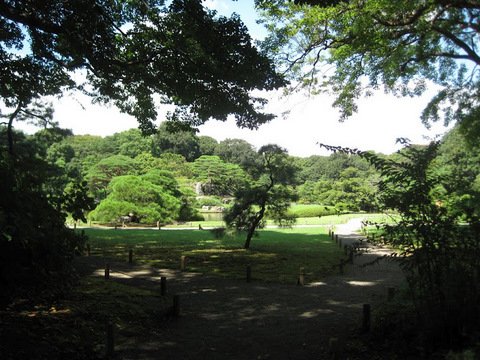
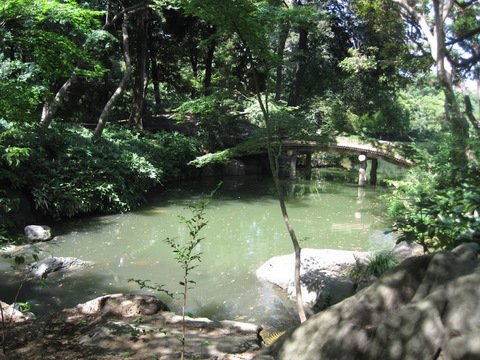
Tragically some of the landmarks in the garden, including stone formations in the lake as well as one of the structures, were damaged in the Tohoku earthquake six months ago.

IMG_4326

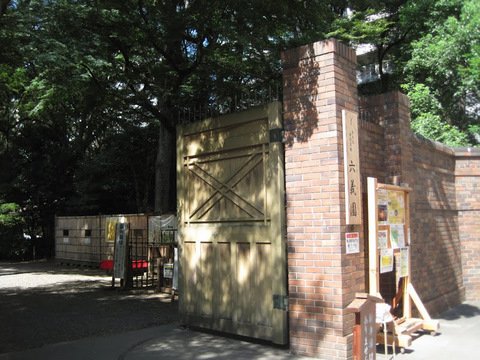
The garden is about a half hour walk from where I live, and miraculously I did not get lost on my way there. It was 300 yen to enter, and I wish I’d brought a book to manufacture a bit more patience to sit and enjoy the scenery. Rikugien was a strange oasis in the middle of the city, with huge trees that blotted out the sky in places, and everywhere cast this incredibly cooling shade. The noise of the wildlife – bugs and birds – was almost deafening, especially with summertime’s constant cicada hum. It may be quieter now that winter’s set in, but it’s still a little oasis in the middle of the big city.

IMG_4335

IMG_4374

Isetan’s Chaya Macrobi

The other day my friend Akiko took me to the top floor of Isetan in Shinjuku to have tea at Chaya Macrobi, a cute little macrobiotic cafe. I only have a few pictures, but suffice to say everything was adorable, everything was delicious, and (almost) everything they sold seemed to be vegan. Their cakes were all made without eggs, dairy, etc, and they even had a little cooler of itty bitty ice creams also made without animal products.

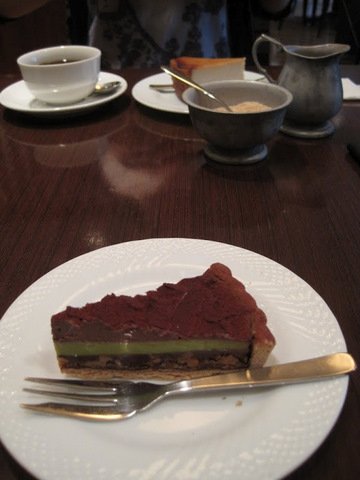
I had the chocolate pistachio cake, and Akiko had the tofu cake. I tried a bite of hers, expecting something like the tofu cheesecake we American vegans know and love.

Before I tried it I asked her what it tasted like.

“Tofu,” she said.

“Not like cheesecake?” I asked.

“Hmm… no.”

I took a bite.

“Well?” she asked.

“Tofu,” I said.

It was a little firmer than “tofu cheesecake” consistency, almost springy. And it definitely tasted like mildly sweetened tofu. I was happy with my chocolate pistachio cake, which had a nice, rich chocolate flavor, a crumbly crust, and also wasn’t too sweet. The sweetest desserts I’ve had in Japan are either drinks (such as my beloved adzuki bean drink, which is all over vending machines in Kyoto and in at least one vending machine in Ginza) or the glorified sugar cubes one has with powdered green tea.

choccake

Alas, like most macrobi places, Chaya Macrobi was also expensive. You get quality and cute presentation for what you pay for (see my 500 yen pistachio chocolate cake), but definitely a rare treat rather than an everyday snack. The ice cream ran about 300 yen for a teeny single serving cup that, coming from the Land of Supersize that is America, my brain could not accept as an adequate serving of dessert.

I’ll probably get some though. I’m glad I know where to find it if I get a craving.