The 5th of May is the Day of children (kodomo no hi 子供の日) in Japan. It is a season festival that marks the beginning of summer.
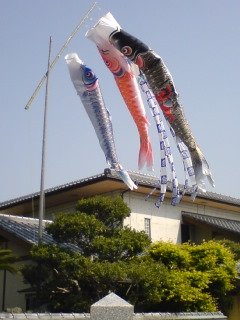
According to the tradition, towns are decorated with big carp-shaped banners called koinobori 鯉幟 (see picture).

The 5th of May is the Day of children (kodomo no hi 子供の日) in Japan. It is a season festival that marks the beginning of summer.
According to the tradition, towns are decorated with big carp-shaped banners called koinobori 鯉幟 (see picture).
Not far from where I live, there’s a funny building. One day, as I was walking by there, I look upward and what did I see ?
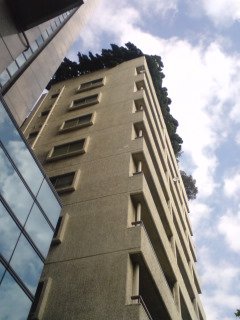
Trees ! It almost look like the building has some hair. There are sometimes strange things in Japan.
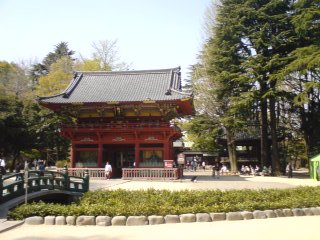
I mentioned the Nezu are previously, well, if you come around, don’t miss the Nezu-jinja sanctuary 根津神社. This shinto sanctuary was created in Sendagi more than 1900 years ago by legendary character Yamato Takeru 日本武尊, prince of the Yamato dynasty. It was relocated to Nezu in 1705 by the 5th shogun, Tokugawa Tsunayoshi 徳川 綱吉, in the Edo period.
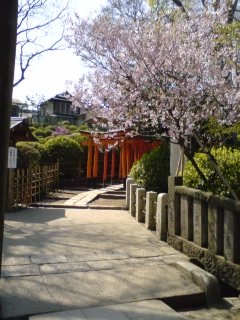
Nezu-jinja has been designated as important national cultural heritage.est désigné patrimoine culturel important national. Around it are other sanctuaries such as the Otome-inari jinja 乙女稲荷神社 or the Komagome-inari jinja 駒込稲荷神社.
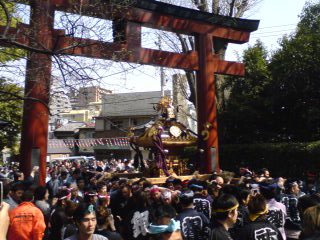
Several festivals take place at the Nezu-jinja, but I particularly recommend you the Azalea festival, Tsutsuji-matsuri which is from early april to early may. If you haven’t anything planned this weekend, go there !

A famous japanese dish is tai-yaki 鯛焼き, literally “cooked bream”. It’s not a dish made of fish though, but a kind of Japanese waffel filled with sweet red bean paste (an 餡). There also some filled with custard cream or chocolate cream sometimes.
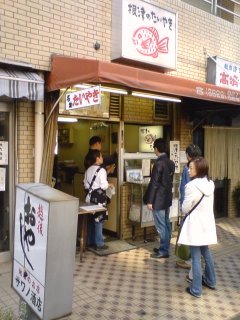
The tai-yaki of the above picture, I bought it in a shop located in Nezu, not far from Ueno. This kind of shop usually prepare a certain amount of ingredients, and thus close when they have used and sold it all. In the case of the most popular shops, the time they close can come very fast. So if you plan to have some tai-yaki from a famous shop, it is better to go early.
Japan is famous for being a safe country. Theft and other uncivilized acts are less frequent than in Western countries.
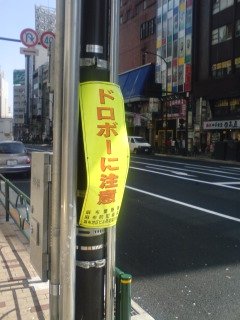
This kind of posters can however be found in different places in town. Here, it’s near a crossroad near the Tokyo Midtown center in Roppongi. It’s written “Beware of thieves” (dorobô ni chûi ドロボーに注意). There are also posters to warn against perverts (chikan 痴漢), a recurrent problem in Japan, expecially in public transport.
The question is, why is it necessary to warn people in the street this way.
One of the advantages of guesthouses is that during one or more months, you leave with other residents. Guesthouses are thus a wonderful place to make new friends from many parts of the world. It is already 1 year and 8 months I’ve been living in a Oakhouse guesthouse, and I’ve met a lot of people, some of them having become very good friends.

Yesterday evening, we had a farewell BBQ party for two residents, an Australian girl and an American man who were to leave the house on the following morning. The party lasted until early…morning. With much booze flowing, it’s not surprising that some passed out after a while like the Oakhouse manager on the above picture who got drawings made on his face by everyone.
It was a really good party during which everyone had a lot of fun. It reduces the sadness of parting.
One of my favorite dishes in Japan is râmen ラーメン, chinese noodles served in a soup with vegetables and meat. This Japanese dish of Chinese origins was immortalized by film maker Itami Jûzô (1933-1997) in his movie “Tampopo” (1985). If you haven’t seen this movie, I strongly recommend you to watch it. To make your mouths water, here is a short passage.
Let’s get back to râmen, here are a few things to know about it. This Japanese national dish is actually diversified. There are indeed many types of râmen depending on the regions of Japan. There are thus Hakata râmen 博多ラーメン (Fukuoka), Sapporo râmen 札幌ラーメン (Sapporo), etc. The difference usually resides in the noodles (shape, thickness), the soup (salt, soy sauce, etc.), or other ingredients.
If you ask about râmen, Japanese people will tell you they prefer this or that kind of soup, the latter playing an important role in the overall taste of the dish. There are shôyu râmen 醤油ラーメン (soy sauce soup), shio râmen 塩ラーメン (salt soup), miso râmen 味噌ラーメン (miso soup) or again tonkotsu râmen 豚骨ラーメン (pork bone bouillon). Personally, I must say I have a preference for miso râmen, but not all restaurants serve excellent râmen. One generally goes to the same râmen restaurants when one has found good ones.
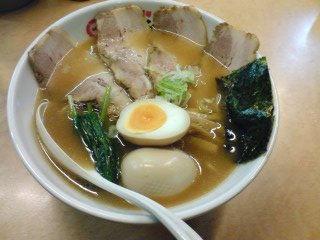
Besides, Japanese people being gourmets, there are special magazine presenting the best râmen restaurants in town. This kind of guide books has actually helped us, a friend and I, in finding a restaurant that serves miso râmen with squid ink oil (see picture below). The look is quite incredible.
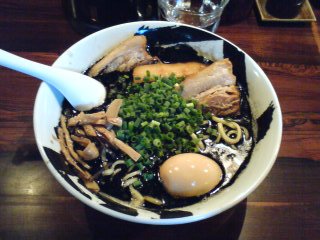
Another important element of is the other ingredients. There are generally bamboo shoots (shinachiku 支那竹/menma 麺麻),roasted pork (châshû 叉焼), soft-boiled eggs (hanjuku tamago 半熟卵), etc. Personally, I usually order châshû râmen, that is râmen with extra slices of roasted pork.
Also, are usually served very hot. It is thus necessary to swallow them together with air. In Japanese, they call this way of eating susuru 啜る. This is often the most difficult part for foreigners as most of us have been told not to make noise when eating as a kid.
I hope this will have made you hungry. 😉
Today, I would like to tell you about a place I like in Tokyo. It is the old merchant street of Yanaka Ginza 谷中銀座. It is situated about 3 min. on foot from Nippori station and around 5 min. from Sendagi station (Chiyoda line).
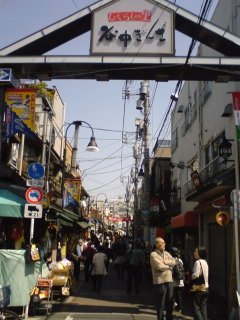
This small street still retains a traditional atmosphere nowadays. In Japanese, this kind of place is called “shitamachi 下町”. There many shops line up, selling food, craft or many daily items. You will recognize the most popular of them by the number of people queueing in front of them. By the way, a website presents those shops, but it is unfortunately only in Japanese.
From there, you can visit the surrounding area where there are many temples and the Yanaka cimetery. Enjoy the sight-seeing !
I’m invited to a colleague’s wedding this saturday. It’s the first time in more than 3 and a half years of life in Japan. The wedding ceremony will take place in a chapel a building looking like a chapel and dedicated to Western-style weddings. By the way, the building’s name, Saint Marry Church (hence the two “r” in Marry) evokes well its exclusive use.
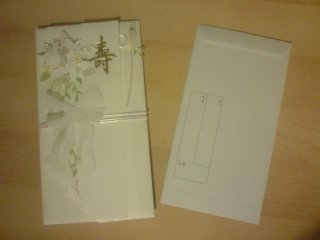
Western-style wedding or not, there are inchangeable and typically Japanese rules to this kind of occasions. As a guest, I have to make a gift in the form of money to my colleague. This is called goshûgi ご祝儀 in Japanese. But, of course, it is out of question to hand it directly to my colleague. The bank notes must be inserted in an envelope on which I’ll have written my name, my address and the amount offered. This envelope is then inserted in another one (goshûgi-bukuro ご祝儀袋) made of Japanese paper and decorated with tied strings called mizuhiki 水引. You would think we’re finished with enveloping, right ? Well, no ! The custom is generally to wrap the goshûgi-bukuro in a cloth called fukusa 袱紗.
So, there’s still a question. How much to offer ? This is not something left to chance either. The amount of money offered is usually determined by your relation to the bride and groom and your social status. Besides, it is usually better to avoid pair numbers as they are divisible by two and thus symbolize a possible rupture. Friends or colleagues of equal or lesser rank would offer 30,000 Yen, a chief 50,000 Yen, parents between 50,000 and 100,000 Yen. In fact, the ornaments on the goshûgi-bukuro more or less reflect the amount to be offered.
Welcome to this new blog of Oakhouse Supporters.
Apart from being a day on which we make jokes in the West, the 1st of april is the beginning of a new fiscal year in Japan. It is thus a good day to begin this blog which, I hope, will fascinate you, and if you’re a Oakhouse resident, maybe you will give us the privilege to take part to this blog.
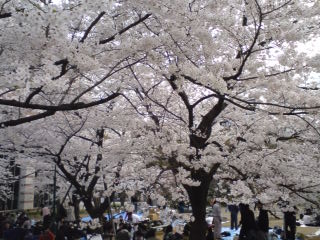
The end of march – beginning of april period is also when the cherry trees blossom in most of the Japanese archipelago. This natural phenomenon is much appreciated by Japanese people who gather between friends or colleagues under the branches of the cherry trees to picnic. It is called hanami 花見.
If you come to Japan at this time, you must absolutely experience hanami. In Tokyo, there are many spots famous for their cherry trees like Ueno Park for example.