オークハウス吉祥寺2」カテゴリーアーカイブ

5 Tips on How to Host a Party with Housemates

IMG_0057

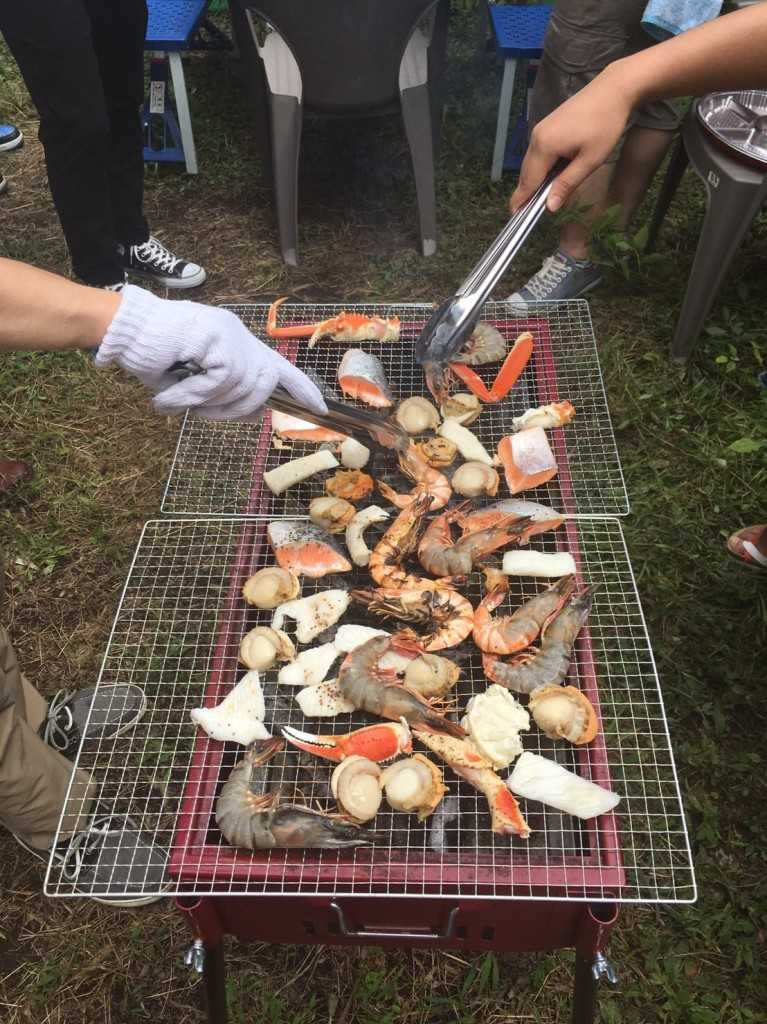
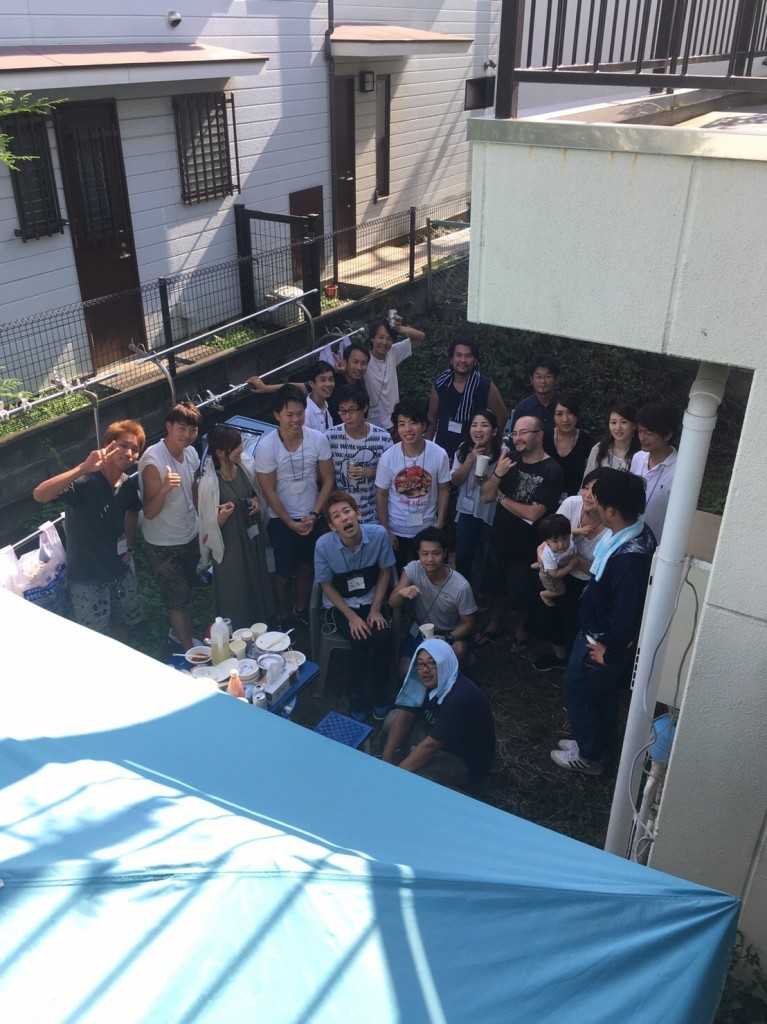
Every now and then, we host a BBQ in the backyard in Oakhouse Kichijoji 2.

This time, we planned something big and we invited more than 30 people from outside the house. Along with the photos of the BBQ, let me tell you some tips on how to host a party like this in Tokyo.

■ Buy food and drinks online
スクリーンショット 2016-09-18 10.53.18

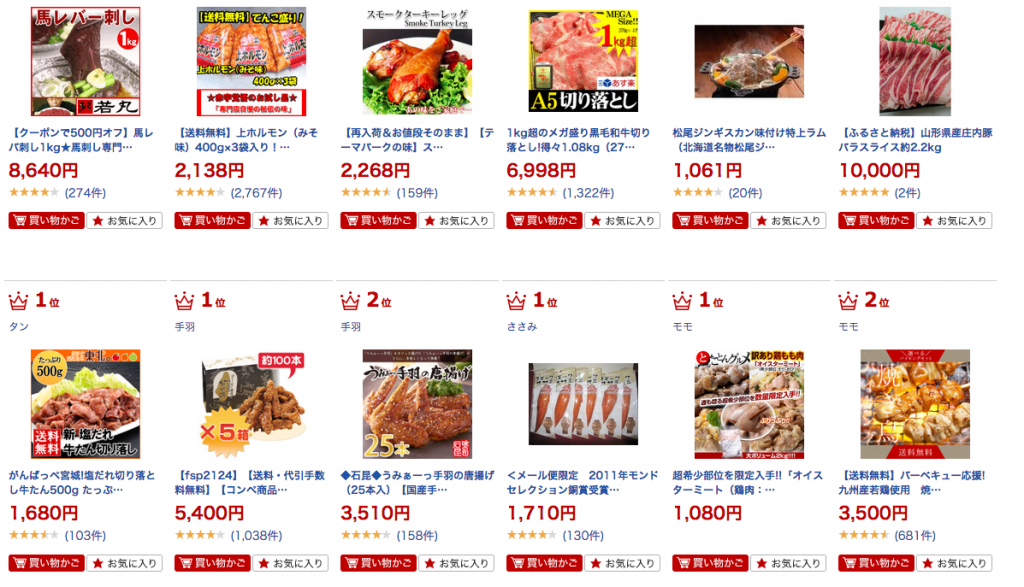
Although, supermarkets are available in walking distance, it makes more sense to buy food and drinks online. You probably want to do some research before you make a purchase but there are thousands of shops selling meat and vegitables on Rakuten. Amazon Japan is also as useful or maybe better than Rakuten when buying certain things, I think Rakuten has more options when it comes to buying food.

We got a lot of marinated beef on Rakuten and it was very good. I would buy the same thing again.

■ Collect money upfront
IMG_0056

No matter how you invite people (messaging a group, talking to people in person, Facebook, etc…) there will be always someone who doesn’t show up on the day. It won’t be a problem if that is 1 or 2 people. It will be if the number gets bigger.

And this problem is usually serious if you plan to buy things in advance. Someone has to pay for the food and drinks and people never pay for what they didn’t eat.

■ Consider “Bring your own food and drink (BYOF+D)”

The easiest way to do something with this is to go potluck. Tell your friends they need to bring something to eat and their own drink to participate this party.

People usually prefer this way because they can choose what they can bring and how much they want to pay.

I usually host a party this way in the house and we get more than enough food on the table.
IMG_0059

■ Go for “Wild Magic”

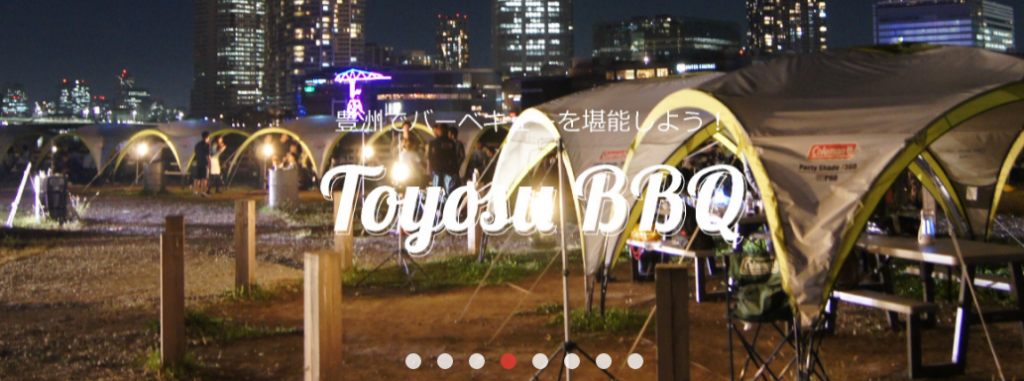
Wild Magic is a BBQ site in Toyosu, which is located on the east side of Tokyo. The place is pretty big for the location (16,000㎡) and the entire facility is fairly new (opened in 2012). It’s also a camping site so you have an option to BBQ and stay the night here too.
スクリーンショット 2016-09-18 15.25.42

This place is getting popular so you might want to make a reservation in advance. What’s good about this place is that they have food options that you can choose from. Basically, you don’t need to prepare anything to do BBQ here. They have marinated meat, vegetable, drinks, everything. My favorite is “Beer chicken”. Basically they give you a marinated whole chicken and you put opened beer can with beer inside and stick it in chicken’s ass. Put it on the BBQ grill long enough, you get to cook the chicken from both outside and inside.

Check out their website for more information.

■ Not enough cash? Here’s the cheapest party option of all

If you’re in short of cash, or you plan to invite people who don’t seem to have too much money, I found a perfect option for you. Find a Domino Pizza in your neighborhood (they are literally everywhere) and order a pizza without toppings.

Why no toppings? Because it’s the toppings that make the pizza so expensive. I think the pizza tastes way better than the Domino pizza in the United States (What a cliche) but it’s usually more pricy in Japan for some reason.

Anyway, order a pizza without toppings and cook the toppings you want with everyone coming to the party. I don’t know any cheaper party than this.

But, make sure to order online. and do make sure to look at the English website, NOT JAPANESE. Domino pizza sometimes do campaign like “Get one pizza, Get one free” ONLY ON English website. Just google Domino and change the language setting. If I remember it correctly, it should be 1400 yen. and with the campaign it’d be 1400 yen for two large size pizza!!


Let me know if there are other cool tips that you know and I don’t!
IMG_0062

3 practical reasons why I’m happy with living in the share house

Pancake Party_82

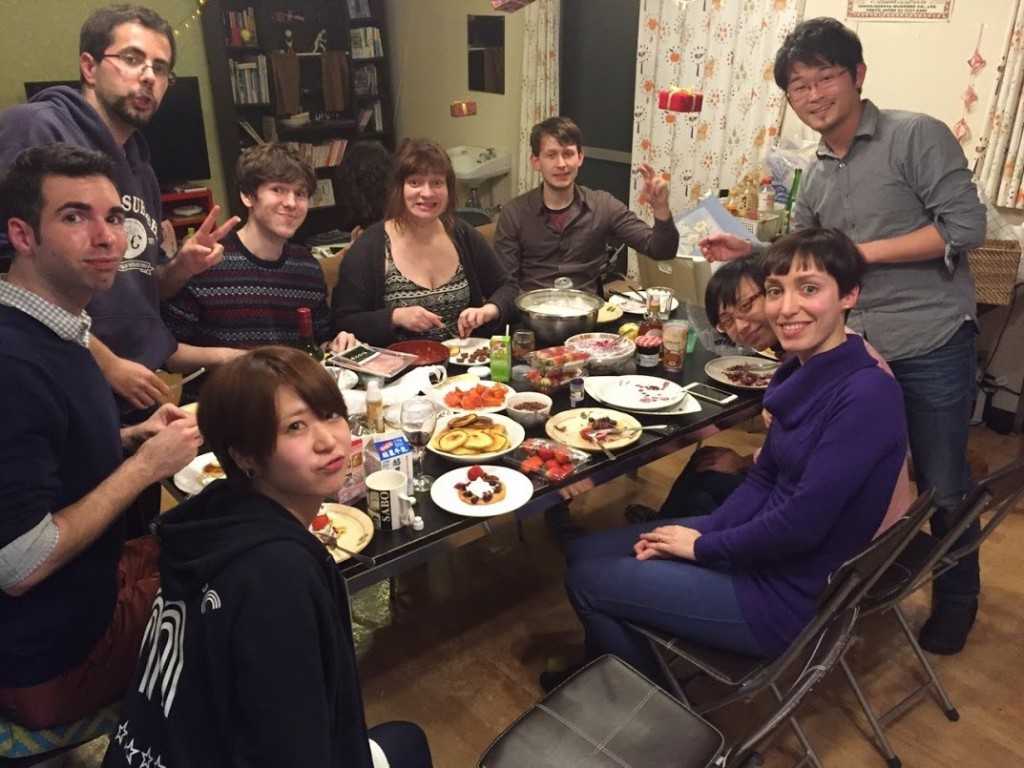
Now the end of march is coming, many of you might be thinking about moving in one of the share houses in Tokyo. As I have been living in a share house (Oakhouse Kichijoji 2) for two years now. Let me tell you 3 practical reasons why I’m happy with the house.

■ You never have to clean anywhere outside your room

IMG_6922

Sharing a house usually comes with some responsibilities. Cleaning up the house is one of them. Some share houses set up some clean up routines and maybe set a rule to take turn to clean up the common areas or shared bathrooms. If you (or a housemate) decide not to be cooperative, life in the house gets uncomfortable (probably disgusting) within a month.

One thing I like about Oakhouse (and it’s an important one) is that there’s no such clean up responsibilities. Oakhouse sends professional cleaning staff at least twice a week (depends on the size of the house) and make sure the common areas are clean.

This means you don’t have to clean anywhere outside your private room. It saves you a lot of time and trouble. You never have to clean the common area, kitchen, shower room, or living room. This is a privilege of living in a share house. (I own a iRobot Roomba to clean my room so I don’t even have to clean my private room. Welcome to the future life! )

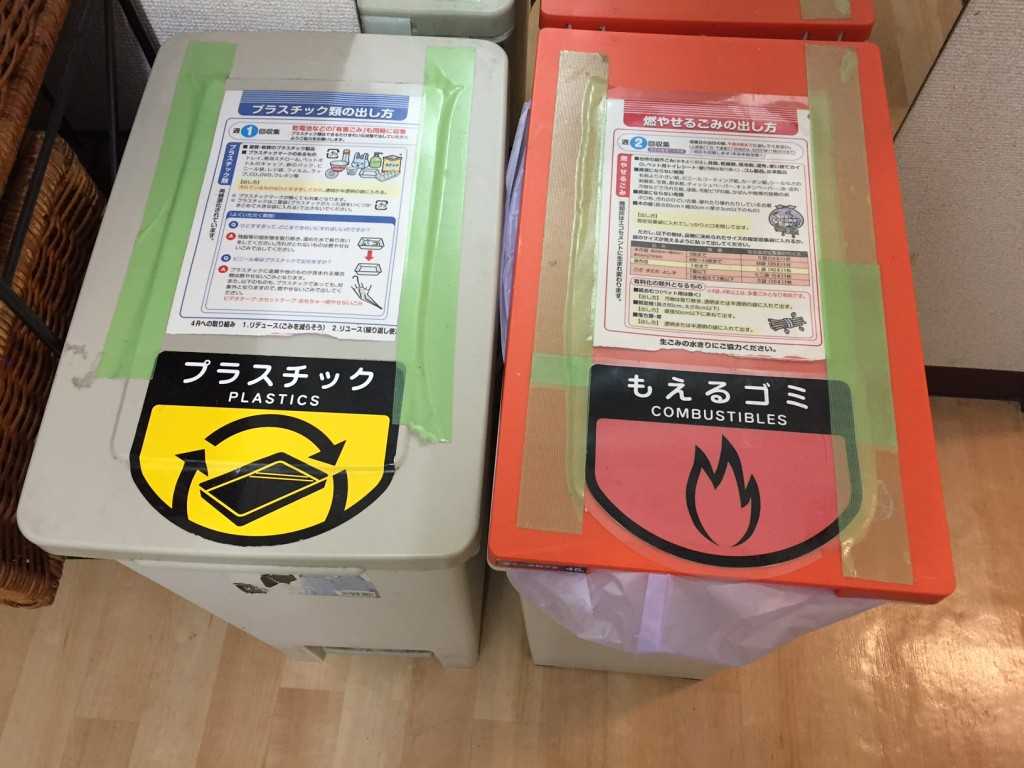
Ofcourse you should clean up if you make a mess, like dropping food on the floor or wiping the table after dinner etc.. I’m talking about a common sense here. Also, make sure to wash your dishes!

■ You never miss your package

IMG_6923

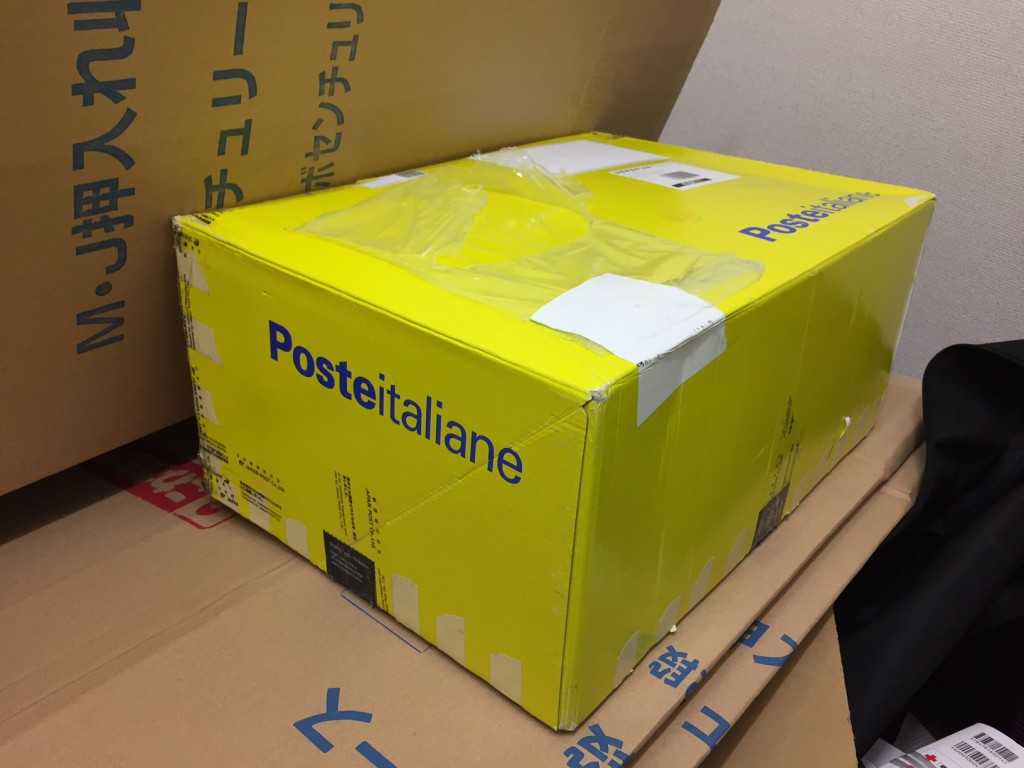
Everyone buys everything on Amazon nowadays. Free shipping, next day delivery, all the things that the retail giant offers are hard to reject. Even if you’re not a local Japanese, buying things online might come in handy. Some of my gaijin housemates often ask me to buy something online and pay me in cash because sometimes what they want (usually things they miss from their own country) is hard to find at a local store in Tokyo.

When you do buy things online, receiving the package might be hard if you’re living by yourself. You don’t want to wait at the house all day long just for the package and waste your holiday. If you’re working late, you never be able to receive the package. The delivery staff don’t just put your package in front of your door because they don’t want to be responsible if the package disappears.

It’s a different story if you’re living in a share house. Any of your housemates can receive your package and sign it for you even if you’re not at home. To do this, it might be better to live in a smaller house. so that everyone in the house knows who you are.

■ There are ways to make your rent cheaper

IMG_6924

You can negotiate to lower your rent in Tokyo, but only when renting an apartment and it’s almost impossible if you don’t speak fluent Japanese. Share house companies like Oakhouse don’t usually answer to rent negotiation but there are other ways to make your rent cheaper.

About a year ago, I wrote an article titled “Ways to lower your rent in Tokyo (using oak house system)“. I showed 5 ways to lower your rent living in oakhouse and these tips are still valid now.

Let me tell you the easiest one. Read the No.4 tip in the article above and contact me. As I told you before, I’m currently living in one of the Oakhouse share houses, Oakhouse Kichijoji 2.

Christmas party!

886272_10153856473220799_8586099641645614725_o

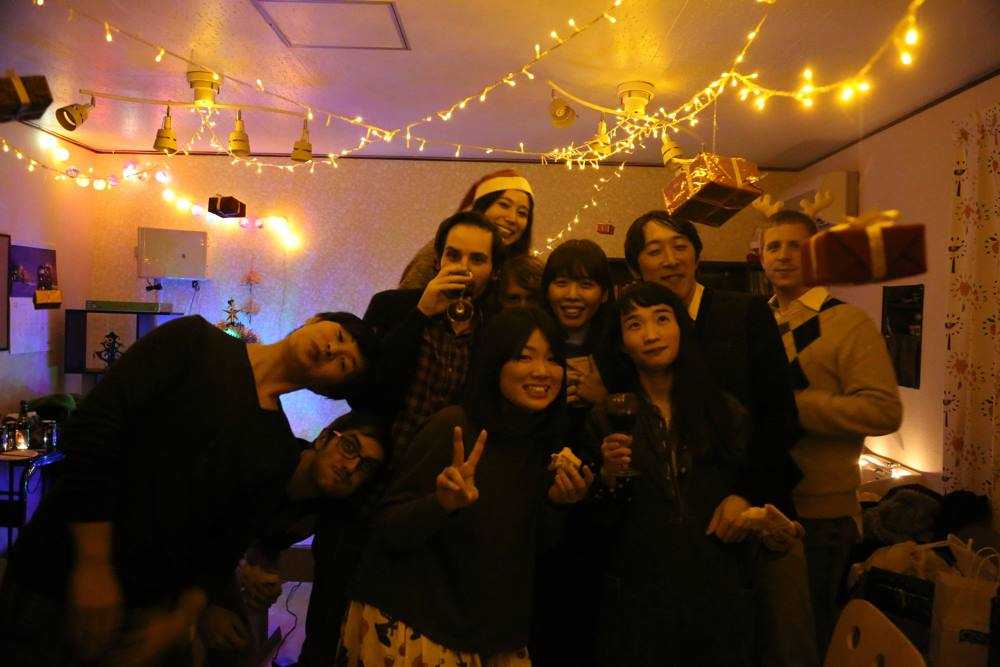
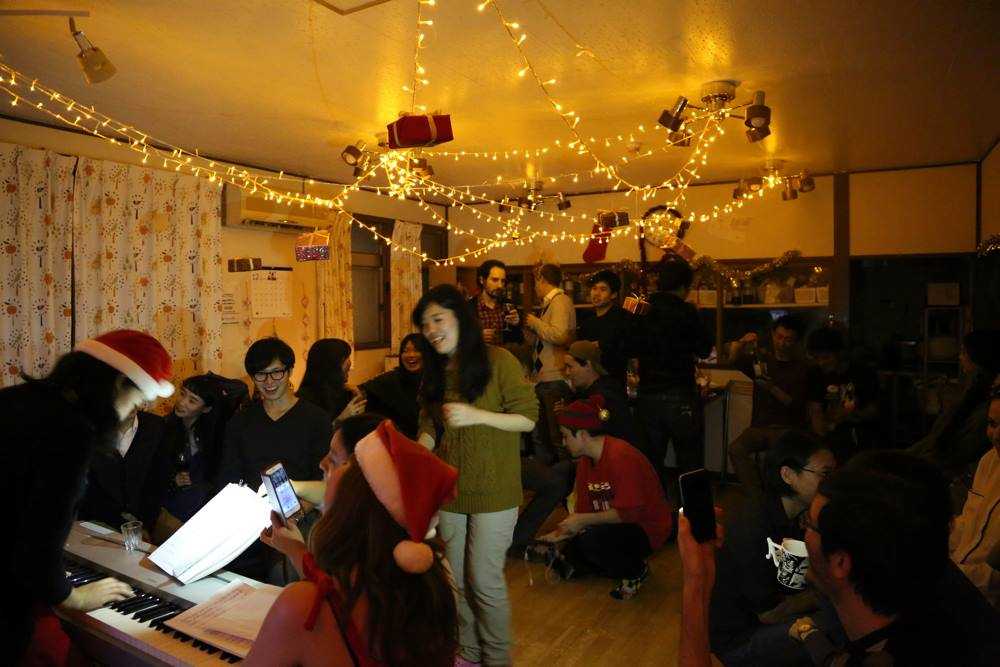
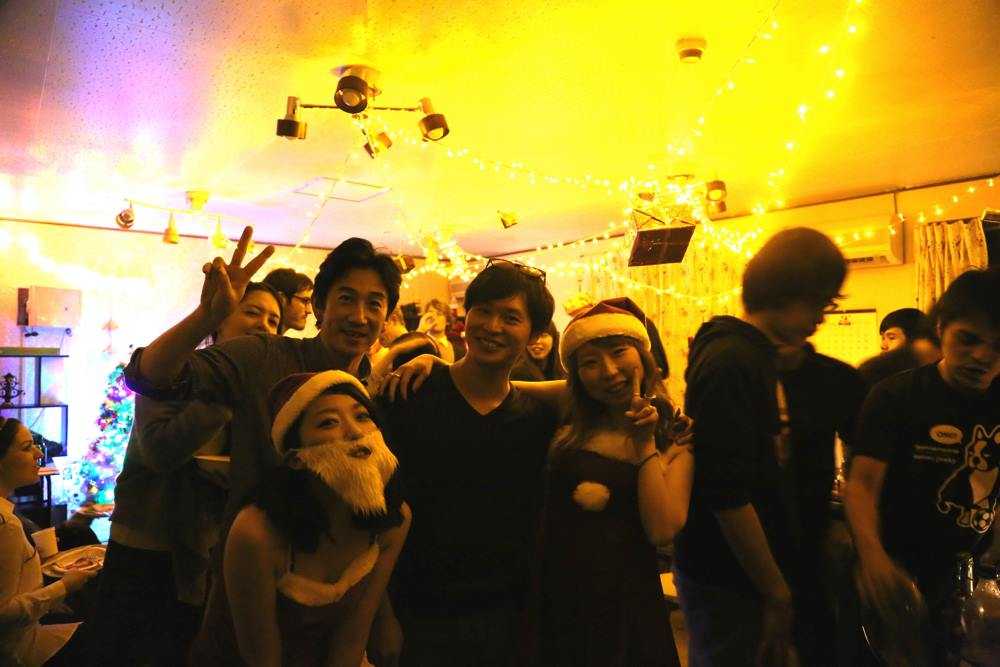
On a Christmas day of 2015, we hosted a Christmas party at our house, Oakhouse Kichijoji 2. It was a great party with lots of guests coming from outside. Around 25 people showed up.

Me and some of my housemates did some Christmas decorations in advance too. Look at the floating presents! The decorations are made by former residents. People come and go but those decorations stay and passed on from one generation to another. Yes, this house has some history.

883647_10153856477985799_855749676833735396_oOakhouse privided us some Christmas lights to make the room look nice.
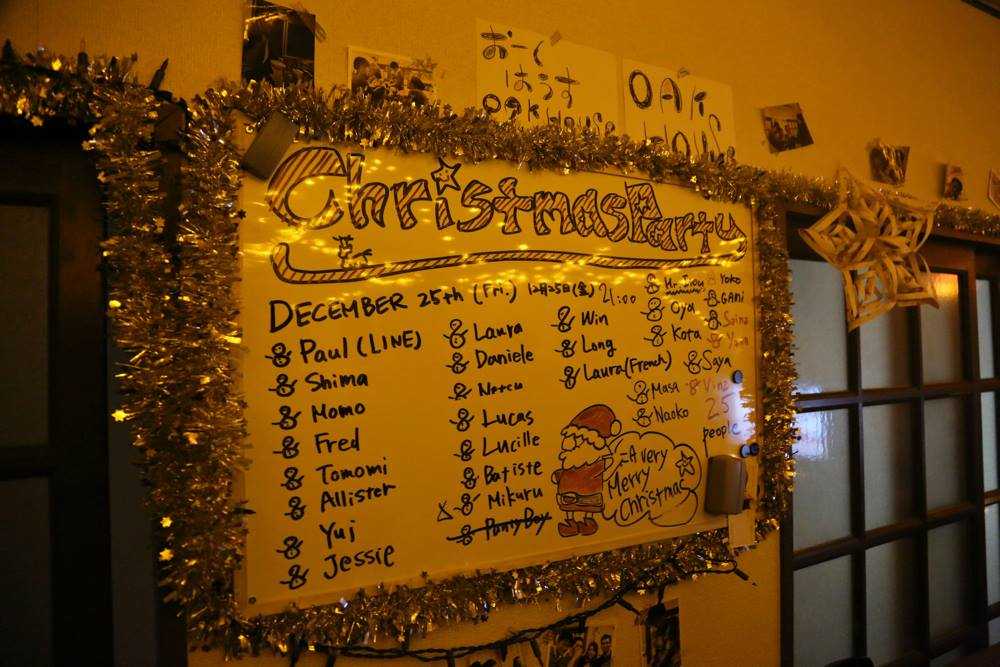
1277487_10153856473940799_6915690581219044183_oDrawing and writing names on a white board is something we usually do.
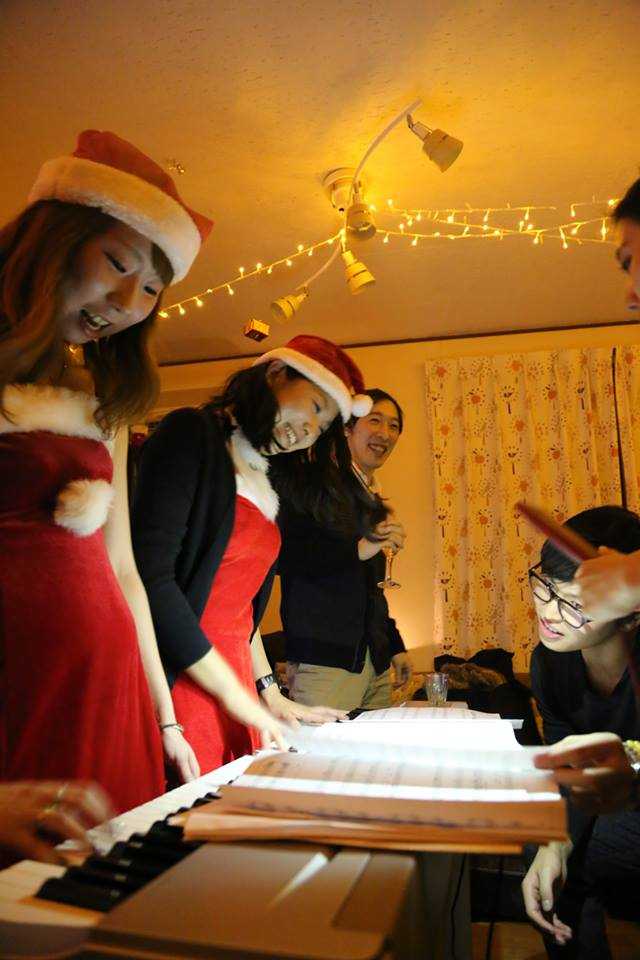
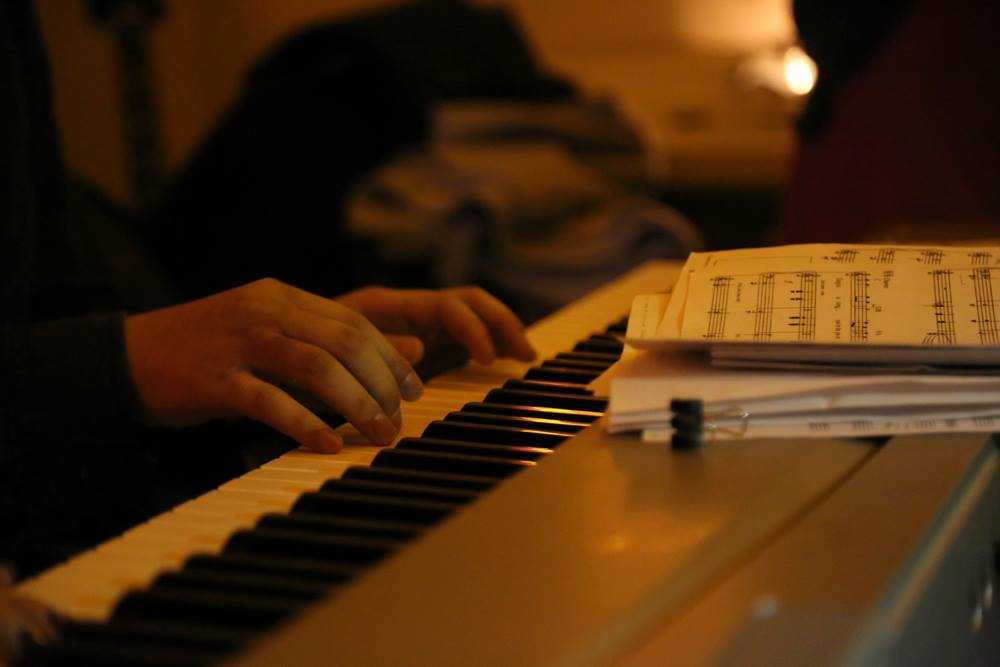
We played some songs and sing together and it was so much fun! Putting a piano in the living room was definitely a good idea. All the other oakhouses should do the same!

1606952_10153856478180799_6717541307496527077_n
Momoko playing Christmas songs

11182769_10153856477370799_2955272876681684809_oA cool shot by Daniele, the photographer.
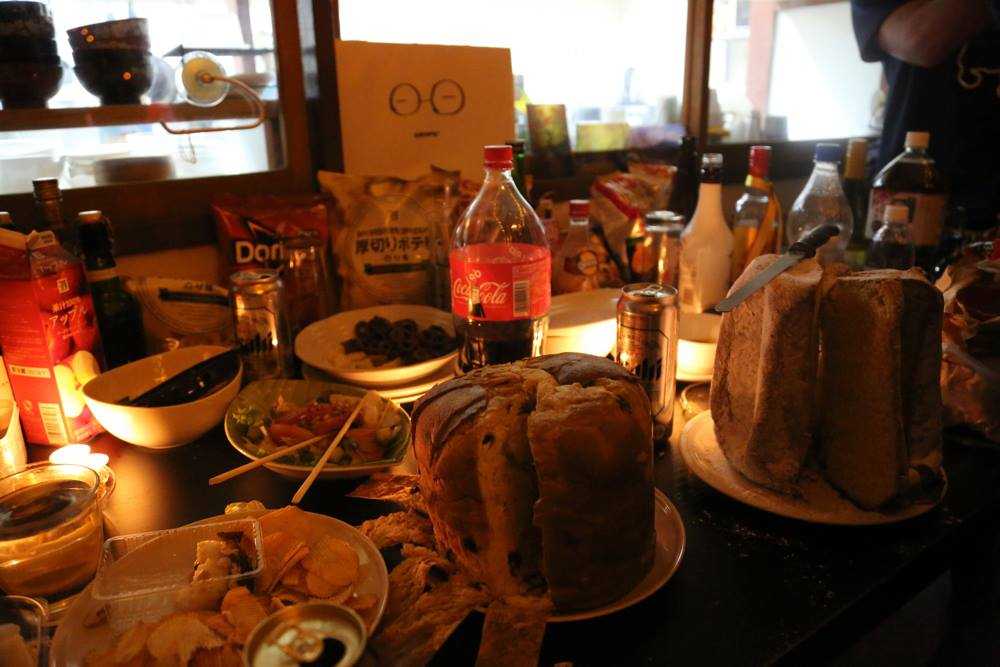
1933145_10153856473305799_7021247693637786005_oTons of food and drinks our guests brought.
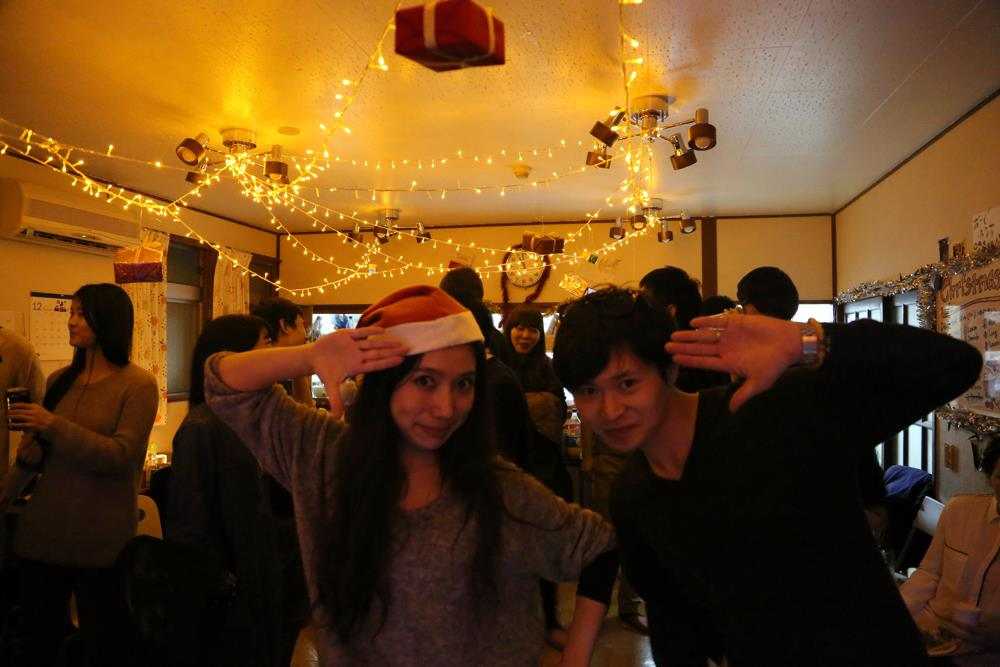
Potluck style works the best when you expect many guests but you’re not exactly sure how many. Just ask them to bring some food or alcohol, usually just one or two persons portion would be enough. This way, there won’t be too much food even if your guests end up not showing up. Making the party open, meaning the guests can also invite anyone they like, is another thing you should consider. You will see some new faces but that’s part of the fun.

12371116_10153856473225799_1493073602957408499_o

1933273_10153856473315799_8027666320862983518_o

Steel Rail Blues

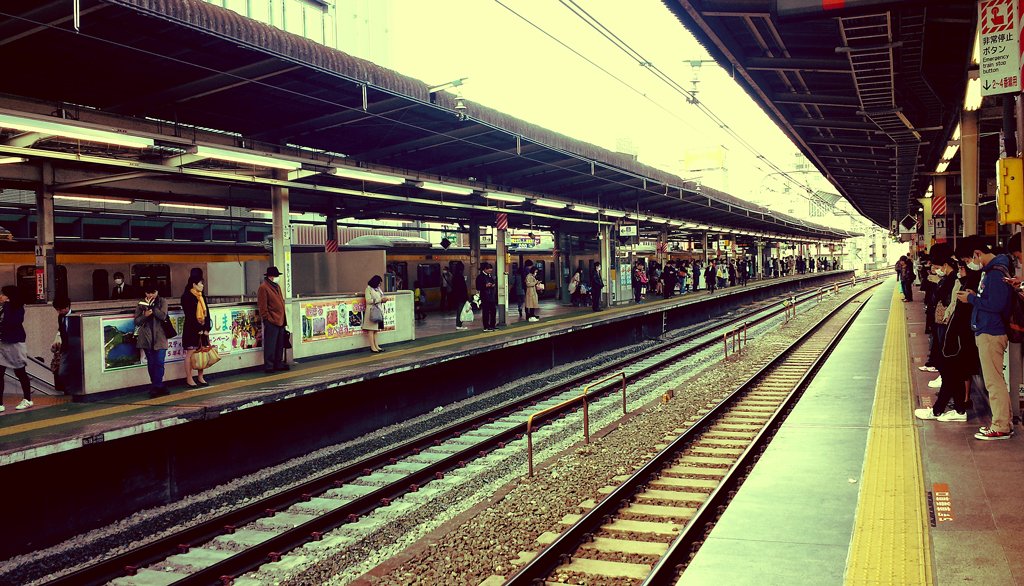
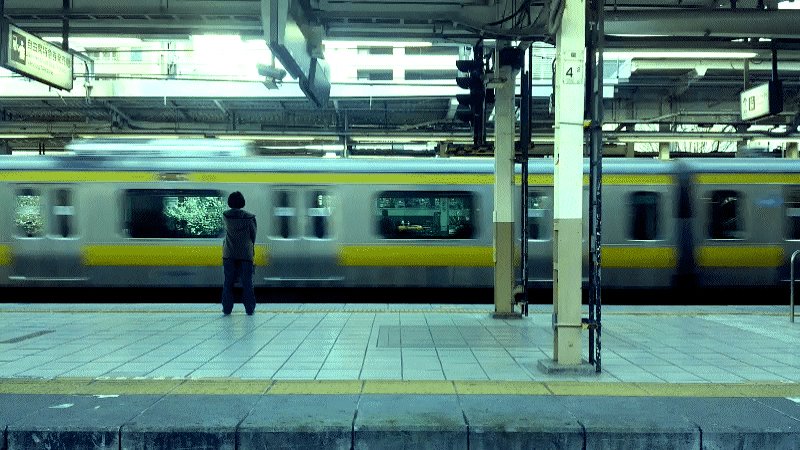
Kichijoji StationThe daily grind on the Chuo Line.

I can think of no better way to enjoy a brisk autumn day than a bike ride, especially if it ends at the park, paired wonderfully with wine and cheese. I have been an avid cyclist my entire life, foregoing buying a car out of principle , instead dreaming of the parts I could buy for my next bike build. Tokyo seemed like a cyclist’s dream, and for the most part that statement holds true. Yet ultimately we must face certain realities: the geographical vastness and frenzied pace of life in Tokyo.

If I leave for work an hour earlier, I may be able to cycle there in time. But what if there’s a meeting in Yokohama? That’s another two hours, I’d never make it home. It soon dawned on me with a crushing sense of defeat that, just like almost everyone else in Tokyo, I would have to use the train and subway systems as part of my daily commute.

Japan Rail, Keio, Tokyu, Seibu, Tokyo Metro, etc., there are almost as many operators as there are rail lines. The Greater Tokyo Area is home to the world’s largest transport network, and over half the population uses it as a primary means of transportation. An overlay of the metro and rail maps reveals a chaotic spiderweb of transfers, routes, and cross-stations. Upon my arrival it all seemed a bit too labyrinthine, but there is an odd method to the madness when you realise the sheer volume of daily riders most stations have to accommodate.

Below I’ve outlined some of the core tenets of riding in the GTA, so learn from my blunders! Navigating the rails will become second-nature (whether you like it or not).

    • ▸  Plan your route ahead of time. A trip that would be fairly direct via car could be quite complicated using railways, especially heading towards the centre of Tokyo. Although delays are inevitable, the monitors above each railcar door communicate pertinent information. Sites like Jorudan and Google Maps (Along with their respective smartphone apps) are invaluable tools.
    • ▸  Do not be surprised if the fare price is ridiculous. If you intend on working in Japan, discussing travel accommodation from your employer is reasonable, if not expected. Price is determined relative to your distance from your destination, unlike the single fare you would expect on a Western transportation line. If it’s not too far, it can sometimes be cheaper and faster to walk.
    • ▸  Ditch the paper tickets after you’ve gotten your bearings. A PASMO / Suica charge card may only offer a two-yen fare discount, but save you the hassle of carrying fistfuls of coins or worrying about losing your paper fare. Losing a ticket between stations could turn into a complete nightmare, transit officials regard it as a major offense. PASMO cards are also accepted as debit in shops around stations and combinis.
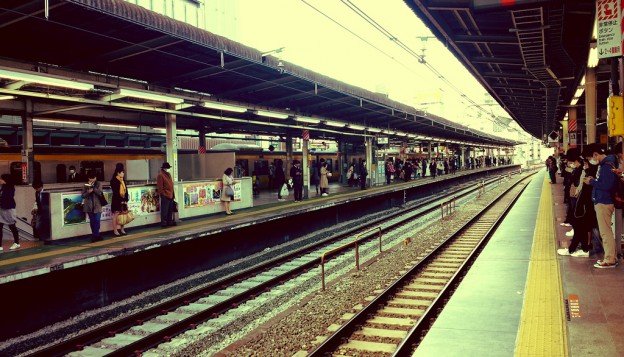
    • ▸  Wait in the demarcated lines and queue up on the platform. Allow passengers to deboard before filing in (do not cut the queue!). The Japanese are too well-mannered and soft-spoken to call out your misstep, but rest assured you are not doing anything to help the gaijin cause.
    • ▸  As a gaijin, do not be surprised or offended if some passengers go out of their way to avoid sitting next to you, even if there are plenty of empty seats, Maybe your beard is too big, your clothes too loud and colourful, or you’re showing too much cleavage – maybe there’s a gaijin pheromone our noses have not adapted to yet. It happens.
    • ▸  Talking at any length for anyone over student age is frowned upon in direct proportion to how crowded the car is. Keep the murmuring to a minimum and phonecalls for emergencies only.train_aloneA rare glimpse of solitude.
    • ▸  Tokyo is a vertically integrated city, and space comes at a premium. The same applies to the train. Occupy the smallest amount of real estate possible, even when standing or trying to grab a quick nap. Bring extra baggage only if absolutely necessary. While it may be tempting to sprawl out after a long day at work, remember you are but a Tetris piece on a moving puzzle. Comfort yourself with reminders that a hot shower and warm bed await you at home.
    • ▸  In a work culture like Japan, someone nodding off and falling asleep on your shoulder is fairly routine. Many people have grueling schedules that involve lengthy commutes, it might be their only time in the day to get some rest. More specifically, you are guaranteed to fall asleep on someone else at some point during your stay in Japan.
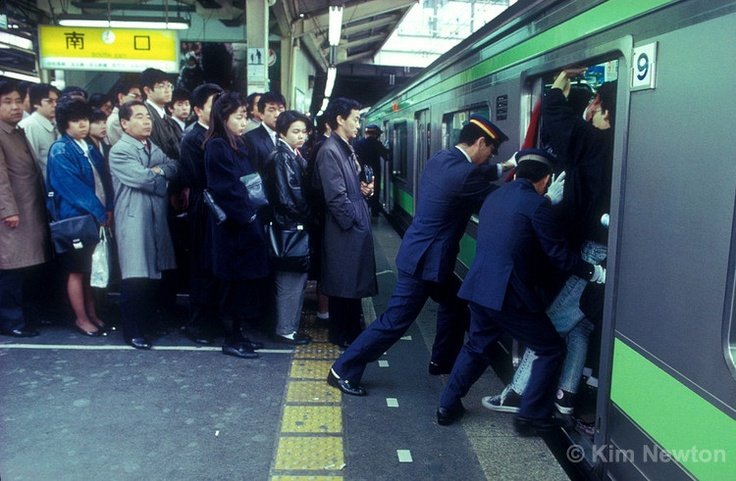
    • ▸  If possible avoid the larger stations directly after the end of the workday, as everyone will be rushing to get home. Riders are literally poked and prodded onto cars in an effort to pack each car like sardines in a tin box. Unless you enjoy body contortion, a sudden sense of claustrophobia, or the odd elbow in your back, grab a cup of coffee and take the train twenty minutes later. Your muscles will thank you.
    • ▸  The bilingual intercom will switch to Japanese-only after 6 PM, especially along the older or less populated rail / metro lines.train_pushIt feels worse than it looks.
    • ▸  Signage is important, and very often not in English. Take the time to learn the Kanji and Hiragana / Katakana symbols for your most frequented stops. I can more easily recognize ‘Hachioji’ now out of a list of stations than its English spelling ( Hachioji Station).
    • ▸  Passengers will blatantly stare at whatever you are reading, drawing, playing, or attempting to write (there were at least four sets of eyes on me as I scribbled the first draft of this article into my notebook). To salvage what little privacy remains , or avoid embarrassment most Japanese people will cover their literature with nondescript material. If you err on the more clandestine side, by all means follow suit. Personally, I find it strange and counterintuitive, a small glimpse into one of the larger problems in modern Japanese culture. It is a topic of contention among members of the sharehouse, where opinions and reasoning for ‘The Great Covering’ are greatly divided.
    • ▸  Last but not least, pick a station at random, a station not on your usual route and make that your destination. Traveling (and getting lost) on the web of rails is one of the easiest ways to discover little corners of Tokyo you wouldn’t have never known existed.train_self

Send help!

If you have anything to add, or just flat-out think I’m wrong, I’d love to hear your opinions. My contact information is below.

Kichijoji Station

The Guests’ Arrival

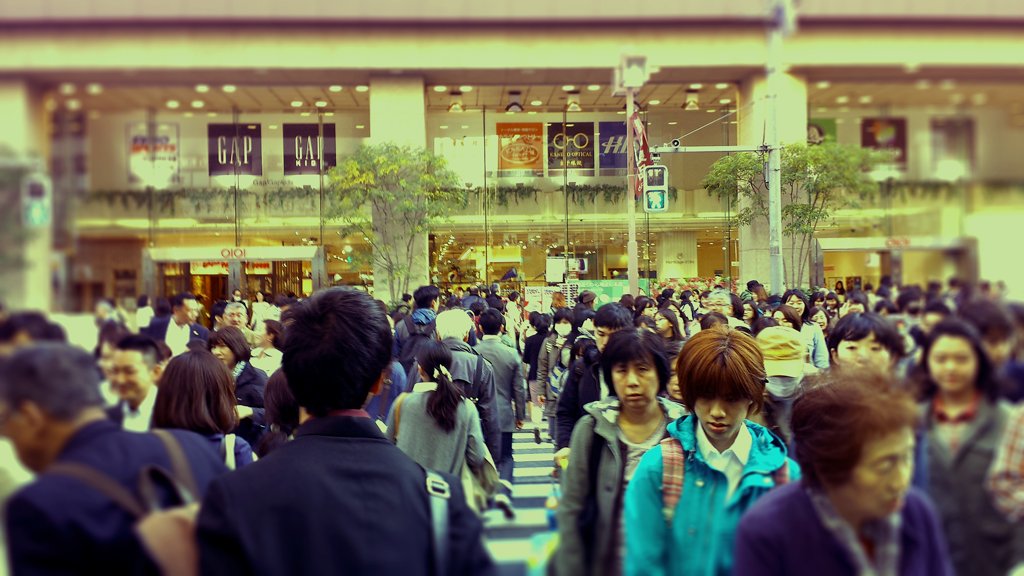
One does not simply cross the street in Tokyo.
Out of the Frying Pan …

“Douzo”, uttered the customs officer as he swiftly guided me into the proper line, the first Japanese word ever directed at yours truly. A brisk spring morning had turned into warm afternoon at Narita Airport, I was bleak and bleary-eyed among the sea ​​of ​​new arrivals. With no working cellphone and armed only with a Japanese phrasebook I searched frantically up and down the terminal for my escort. I rushed to the information desk and motioned for the intercom, but the clerks just smiled widely and shook their heads. In a fit of desperation, exhaustion, and hunger I yelled her name at the top of my lungs. Strike one, my first major faux-pas, and I had been on Japanese soil for less than six hours. Nevertheless a small figure emerged from the crowd.

Mio, my escort-savior was a godsend in every sense of the word. She happily took one of my overstocked suitcases in tow and paid the train fares. The barrage of new smells, signage, colourful wall-to-wall advertisements with strange pictograms , it was strangely (and briefly) invigorating. I fumbled through the phrasebook in search of smalltalk, but as we neared the city center the trains grew crowded, forcing us to separate. Cheerful automated teleprompter aside, the train cart was eerily silent. The passengers made no attempt to converse, heads bowed in what seemed a solemn vigil. I was so accustomed to the controlled chaos of the Montreal and New York City subways, this new quiet was alarming and awkward. Before I could rest my eyes, Mio nudged me in the ribs and motioned to hop off at the next stop.

We arrived at Inokashirakoen Station under cover of darkness, the Oakhouse manager waiting patiently in the moving van (we were two hours late), he laughed. “You look tired.” -. I suppose the expression is universal I had left Montreal in a different darkness, and as I sat atop my luggage I assessed my current temporal juxtaposition. The flight had traveled west, yet time now slingshot in the other direction, settling on a total travel time somewhere between forty hours and three weeks. We stepped out into the night air of what could have been literally Anywhere, Tokyo. After explaining the general lay of the land, the manager mercifully guided me towards the nearest mattress. I kissed Mio on both cheeks (the shock!) and slipped into coma.

Finding your Footing on the Other Side of the World

“Where am I!?” Is not uncommon to say or think when waking in a strange bed, but it was now a genuine concern. The course of events over the last few months suddenly seemed so slapdash and haphazard. At the start of 2015 I had given myself the ultimatum to either enter medical school or ‘finally do that Japan thing’. As a young lad I voraciously consumed anything ninja or samurai-related, keeping the ideal that Japan is nothing but bucolic mountainside complete with tatami mat houses and . Shinto shrines, or light-years ahead with robotic servants and self-driving flying cars Back home, my design business was spinning in circles ;. I had settled into a very comfortable little rut Montreal has such a wonderful abandon, with its bars, cafes, huge parks and general ‘laissez-faire’ attitude all neatly packaged within walking distance. I had been offered a job in Japan with a reputable ESL company in 2013, but quickly found that were I to ever make the move, it would be for a position with more autonomy.

Hachioji Tokyo University of Technology’s Hachioji campus.
Through no effort of my own, I was contacted by Tokyo University of Technology, and one long Skype interview later had signed my life over to them for the next year. I had six weeks to surgically dismantle my Montreal life, rid myself of all earthly possessions, and find a place to call home for the next year. This would be my first time in Japan, with any information anecdotal at best. The concept of a Tokyo apartment was daunting because I knew nothing of the city, its geographical layout, or cultural hotspots. By leasing out a shoebox (what I would be able to afford after key money), being potentially ‘locked in’ to an area I disliked or would make my commute a nightmare could ruin the Tokyo experience entirely.

Pick a Direction and Start Walking

Sharehouses work because many of your co-inhabitants have struggled with that exact thought process, and found solace in uniting the effort (or diffusing it) under one roof, a ‘We’re in this mess together’ attitude. The price of admission are the sacrifices (and benefits) of communal living. Even if you are fiercely independent and covet your personal space like I do, the potential for cross-cultural interchange and reconciliation is boundless. On a much more humble scale, Tokyo is a monolithic mass of fourteen million, the sheer volume of humanity at any given moment can leave you feeling small and invisible. It is reassuring to come home to a familiar face and hear a warm “okaeri” (“welcome back”, roughly).

While sharehouses may be waystations for travelers from all walks of life, the constant influx of fresh faces keeps the group dynamic from growing stagnant. In most cases, there are a core group of ‘veterans’ who are ready and willing to help complete lost causes like myself. Become a veteran, and you will soon have a second family.

The first weeks were largely lost in a hazy, jet-lagged daze, slowly acclimatizing as I settled into a proper work and travel schedule. One of the lasting moments from that tenuous first month I was walking with a housemate through Inokashira Park, a horseshoe slice of heaven Cloven in Two by the Kando River, on the Tip That the local Donkihote (an Indispensable one-stop Shop) Could solve my Amenities problem.

20150402_163417_Richtone (HDR)

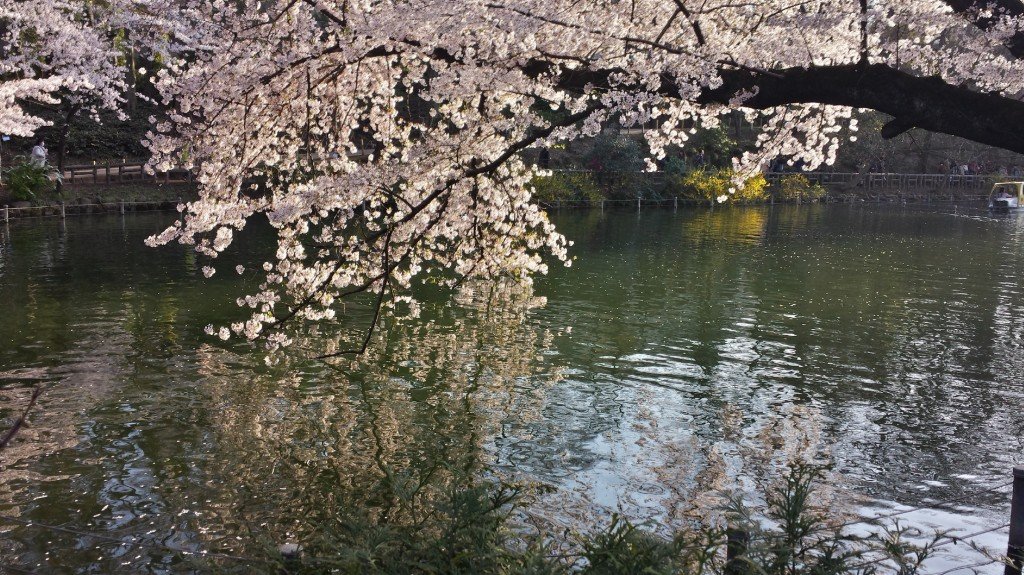
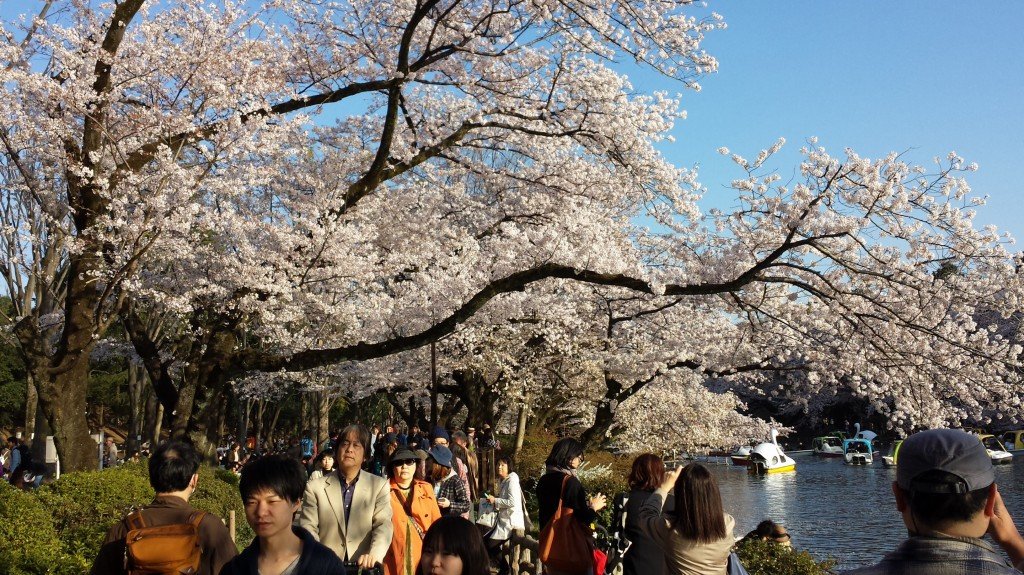
Hanami in Inokashira Park Hanami in Inokashira Park.

It was only after my substantial purchases that I realized a grave overestimation of my conversion skills, having left Canada with $ 200 instead of $ 2000. It would be two very lean months, quite literally. On the return trip a very Japanese “Bonjourno! “Rang out amidst the perpetual hum of the crowd. The cherry blossoms were in bloom and the park completely covered by picnic blankets. An older Japanese man with a sake bottle in the one hand flagged me down with the other. He introduced himself only as ‘Chris’, despite his wife Aota and brother Takeshi.

“There’s no sake in Italy”, he remarked as he refilled my cup and Aota offered more sushi. Chris had not the least concern for my financial woes, only with making sure he had introduced the full spectrum of Asian booze. We drank through two life stories, occasionally interrupted by children who wanted to take photos with ‘the bearded man’. Looking back some months later, the afternoon seems trivial. Yet in that brief moment of despair, Chris and his motley crew meant the world.

As someone who has lived in many countries across the globe, Tokyo is and will remain a difficult place to exist in. Our Western notions of Japan and the Japanese people are utterly antiquated or misdirected, and an open dialogue needs to be established and maintained. I invite you to stick it out with me and our Oakhouse family as I write about Japan, daily life in the sharehouse, arts and events, and anything in-between.

Cheers for now.

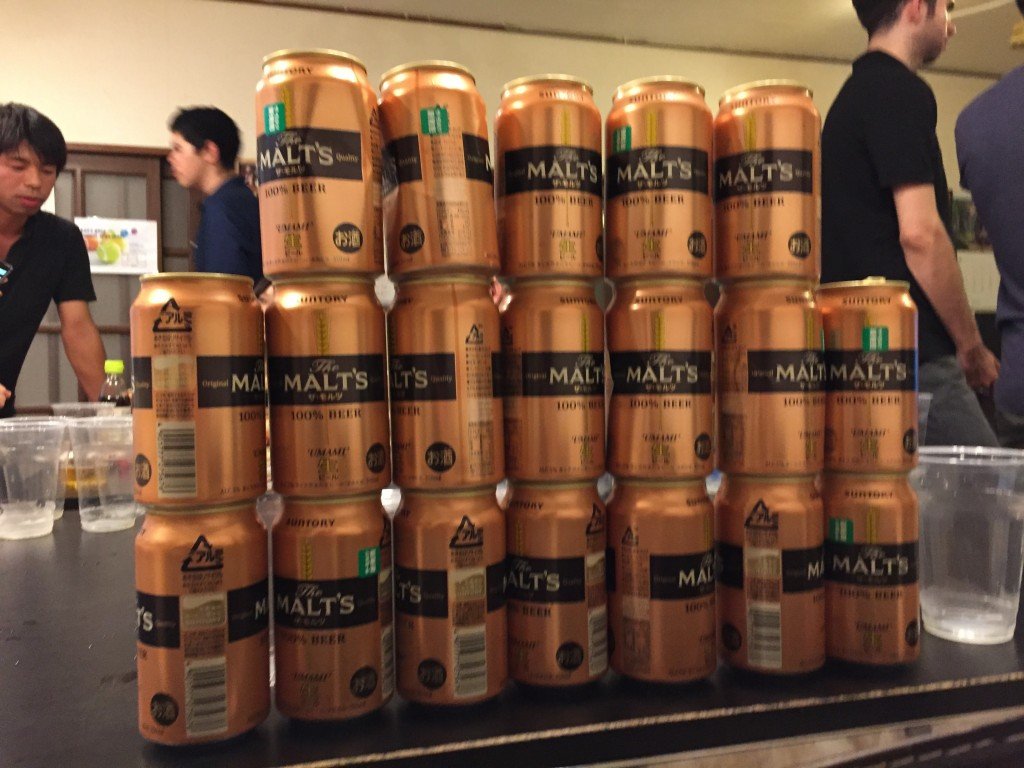
Suntory gave us tons of beer for free!

IMG_4888

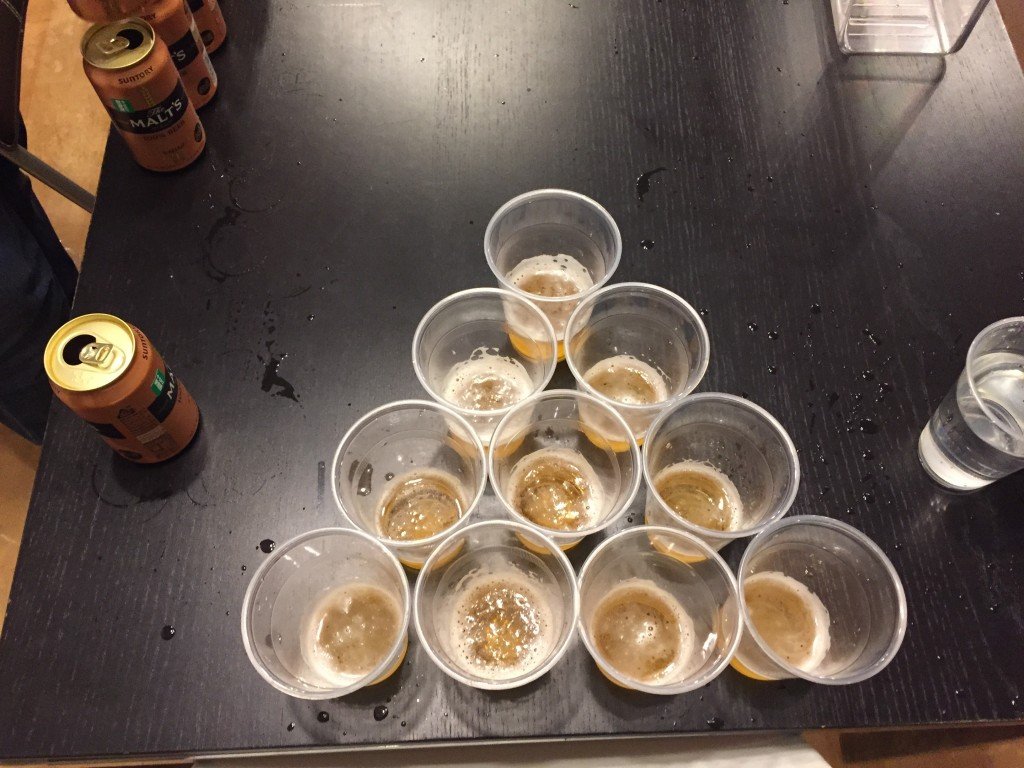
I guess this is one of the things you can expect living in a share house. Suntory, one of the major beverage companies in Japan, just released its new brand of beer called “The Malt’s“. What’s amazing is that they decided to give out tons of beer exclusively to share houses in Tokyo. Our house, Oakhouse Kichijoji 2, got 5 cases (120 cans). There are about 20 people in the house so it’s 6 cans per person. That’s enough for a party, right?

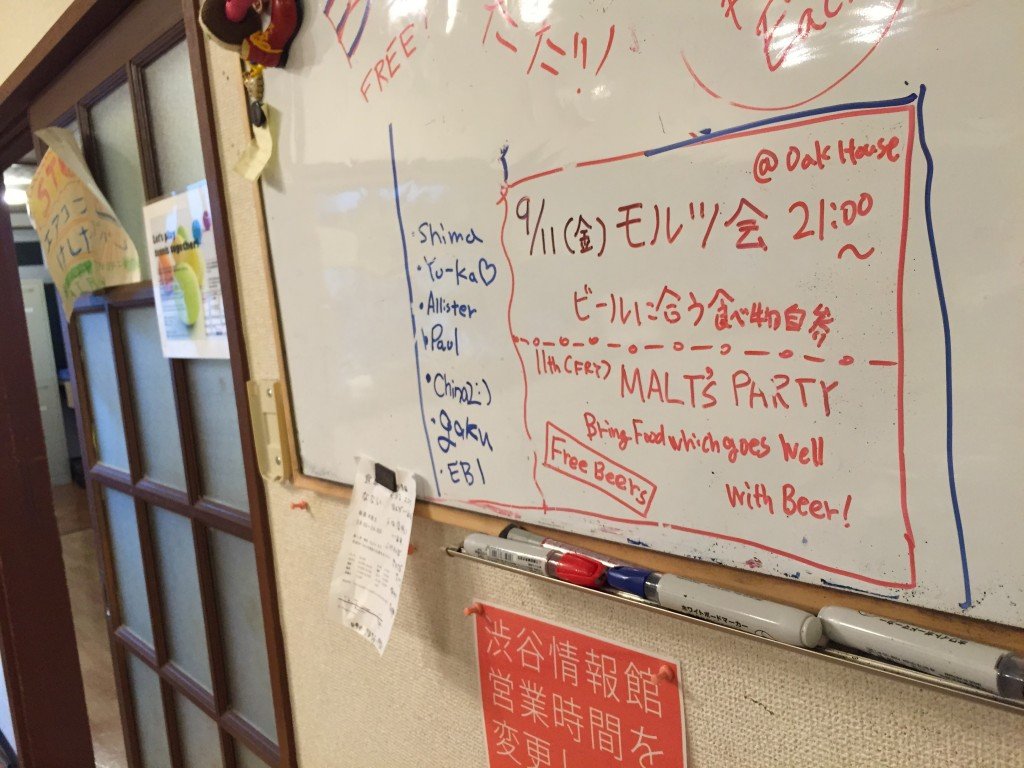
IMG_4866We picked a date and wrote down the detail on the white board, as usual.
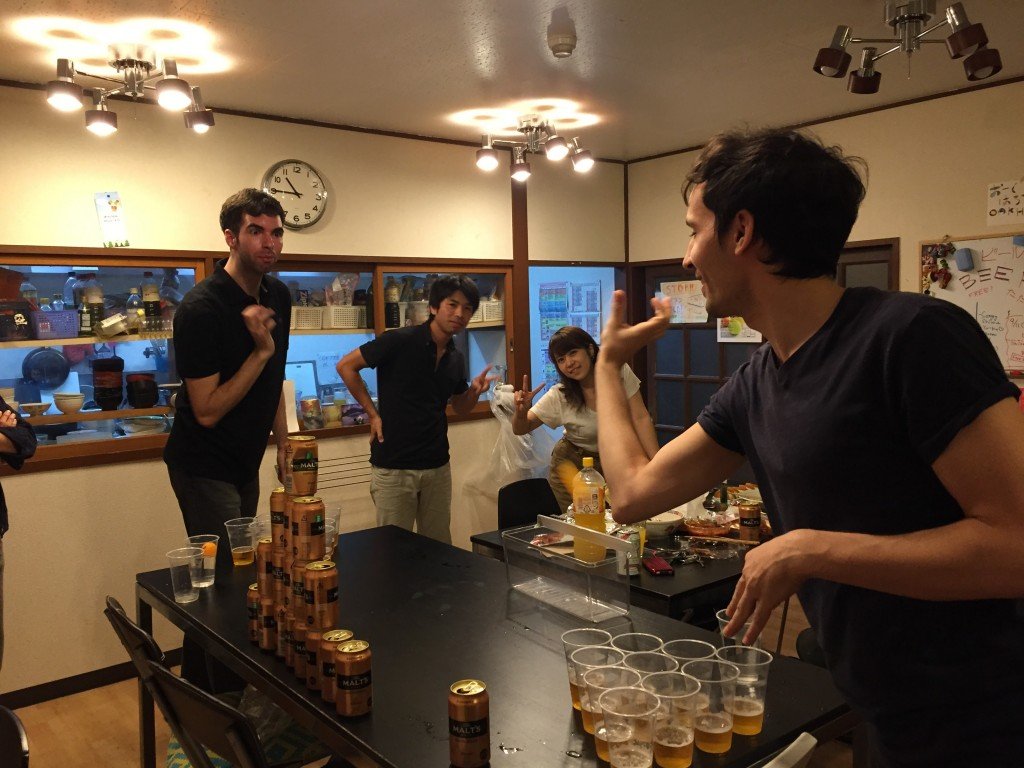
Here’s a tip. Living in a share house taught me that BYOF(Bring Your Own Food) style works the best. Tell people to bring their own food. If it’s a party with a big group, there are always some people who decide not to show up at the last minute. This results money crises as in some people (usually the chefs) fail to collect money. You want to avoid this because no one wants to be a debt collector for the people who didn’t even come to the party.

Anyway, having tons of free beer makes everyone happy. The only problem we could find was… we had too many beers. So we came up with an idea…

IMG_4881

“The Malt’s” has a clear taste which matches with almost any kind of food. I like it that it doesn’t really make you full. Perfect beer for beer pong.

IMG_4880